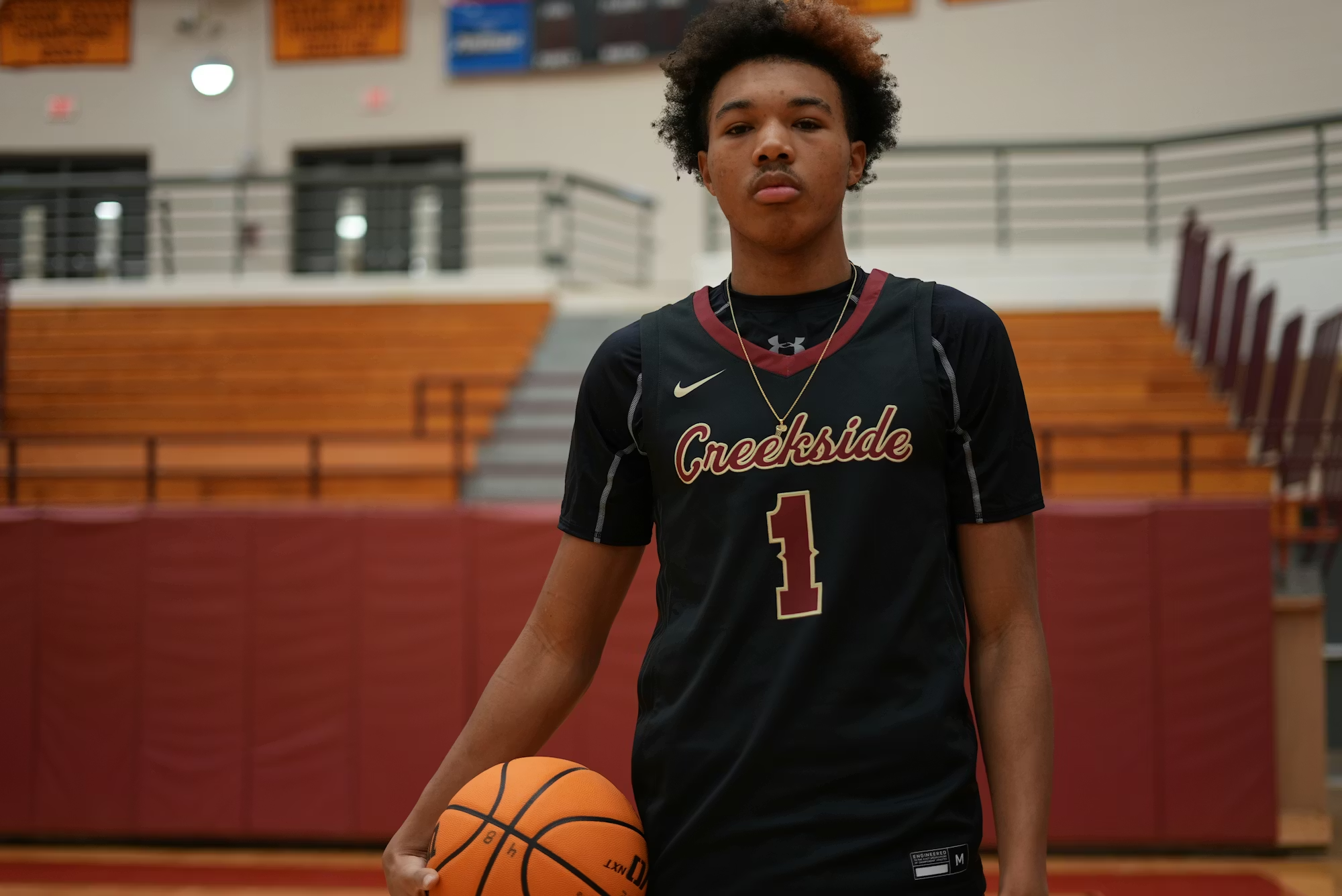
Basketball is not just a sport; it’s a global phenomenon that unites players and fans through its dynamic gameplay and thrilling competition. Understanding the rules and regulations of basketball is crucial for anyone who wants to enjoy the game fully, whether as a player or a spectator. This article aims to provide a comprehensive overview of the fundamental aspects of basketball, including the court layout, gameplay, scoring systems, fouls, and the pivotal roles played by referees and officials.
The basketball court itself is a rectangular area, typically measuring 94 feet in length and 50 feet in width in professional leagues like the NBA. However, the dimensions can differ in high school or college basketball. The court is divided into two main sections: the frontcourt, where the offensive plays occur, and the backcourt, where the defensive strategies unfold. Each end of the court features a hoop mounted at a height of 10 feet, with a backboard that measures 6 feet wide and 3.5 feet high.
Key markings on the court include the three-point line, the free-throw line, and the key, also known as the paint area. The three-point line varies in distance from the hoop depending on the level of play; in the NBA, it stands at 23.75 feet from the hoop at the top and 22 feet at the corners. The free-throw line, critical for foul shots, is set at a distance of 15 feet from the backboard. The key area is particularly significant during offensive plays, as it governs positioning for both offensive and defensive players.
A typical basketball game is structured into four quarters, each lasting 12 minutes in the NBA, accompanied by a halftime break after the second quarter. Each team consists of five players on the court at one time, with additional players available for substitutions during stoppages in play. The game begins with a jump ball at center court, where the referee tosses the ball into the air for players from each team to vie for possession. This initial possession sets the tone for the game, as teams look to establish their offensive strategies early on.
Scoring in basketball occurs through several methods. A field goal made from inside the three-point line is worth two points, while a shot made from beyond this arc is worth three points. Free throws, awarded after specific fouls, contribute one point each to the team’s total. The objective of each team is straightforward: outscore the opposing team by making the most baskets within the allotted game time. As simple as this may sound, effective scoring requires a blend of skill, teamwork, and strategy.
Once a team gains possession of the ball, they are tasked with shooting within a limited timeframe dictated by the shot clock. In the NBA, this clock is set at 24 seconds, which adds urgency and excitement to the game. Teams must work quickly to devise plays that maximize their scoring opportunities while adhering to the time constraint. Failure to shoot before the shot clock expires results in a turnover, granting possession to the opposing team.
Violations in basketball can disrupt gameplay and impact scoring opportunities. The most common violations include traveling, double dribbling, and goal tending. Traveling occurs when a player takes too many steps without dribbling the ball, while double dribbling happens when a player stops dribbling and then resumes dribbling again. Goal tending, on the other hand, involves a defender interfering with a shot that is on its way to the basket, resulting in the basket counting regardless of whether the shot was successful. Additionally, there is the three-second violation, where offensive players cannot remain in the key area for more than three seconds while their team has possession of the ball.
Fouls are a fundamental aspect of basketball that can alter the flow of the game. When a player makes illegal physical contact with an opponent, a foul is called. Fouls are classified into several categories: personal, technical, and flagrant fouls. Personal fouls are the most common and occur during gameplay, often leading to free throws if the fouled team is in the bonus situation, typically after a certain number of team fouls have been committed. Technical fouls can be called on players or coaches for unsportsmanlike conduct, such as arguing with officials or using inappropriate language. Flagrant fouls represent the most severe type of personal foul, involving excessive or violent contact that may lead to ejection from the game.
Each player is allowed a limited number of personal fouls before being disqualified from the game, generally set at six fouls in the NBA. This rule adds a layer of strategy, as players must balance aggressive defense with the risk of foul trouble, impacting their availability as the game progresses.
The role of referees and officials is pivotal in maintaining the integrity of the game. They are responsible for enforcing the rules, making judgment calls on fouls and violations, and ensuring player safety. A typical basketball game features three referees who collaborate to cover different sections of the court, ensuring fair play and accurate officiating. Referees must possess a deep understanding of the rules and often use instant replay technology to review critical plays, such as determining whether a shot was taken before the buzzer or if a foul occurred. Their decisions are final and contribute to the overall experience of the game, making respect for officials paramount in fostering a positive environment.
In conclusion, understanding the rules and regulations of basketball is essential for anyone involved in the sport. From the layout of the court to the intricacies of scoring and fouls, the framework established by these rules ensures fair play, safety, and excitement, deepening the appreciation for this dynamic game. Whether you’re playing in a local league or cheering for your favorite team, grasping these fundamentals unites players and fans in a shared passion for basketball, making every game an exhilarating experience.
